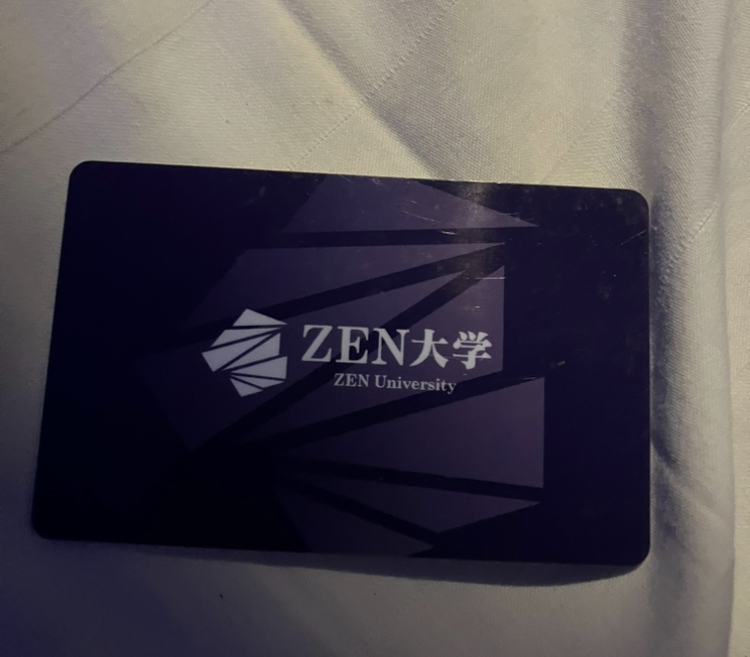
— My First Year at ZEN University —
Tatsuki Mitsuhashi
Period: 1 April 2025 – Present
Dear Readers,
If you ever find yourself wondering:
- What is university life actually for?
- “ have no clear idea what I want to do after graduation.
- I’m just completing classes, but I don’t feel like I’m truly growing.
Then I invite you to pause for a moment and read this personal account.
About Me
“Tatsuki’s World Roaming While Attending University”
I’m Tatsuki Mitsuhashi from Japan.
I started a company at 17, ran food businesses in three countries by 21, and now I’m onto my next challenge.
This is the story of how someone with only basic junior-high-level English travelled the world and began creating books in multiple languages.
- 🟥 A first-year student at a distance-learning university, fully using its flexibility to travel the world
- 🟦 A 22-year-old in my fourth year of overseas wandering, obsessed with languages
- 🟨 Reviving a company in its fifth year after major losses from opening restaurants in three countries
Places I’ve Visited
🇯🇵🇦🇺🇻🇳🇲🇾🇵🇭🇮🇩🇮🇳🇰🇭🇹🇭🇹🇼🇸🇬🇨🇳🇰🇷🇦🇿🇰🇼🇴🇲🇦🇪🇷🇸🇧🇬🇪🇬🇰🇬🇰🇿🇲🇴🇹🇯🇭🇰🇭🇺🇲🇩🇷🇴🇺🇿🇱🇦
- Transnistria, Karakalpakstan e.t.c.
Why University Changed Everything for Me
From age 17 to 22, I lived as the CEO of what I dreamed would become a visionary company.
As a result, I saw the world almost exclusively through filters like economic markets and optimism.
Numbers. Communities. Efficiency.
These things matter, of course but my worldview was thin. I couldn’t fully grasp the complexity of society or the depth of human civilisation.
This isn’t a criticism of those perspectives , it’s simply that I myself was blind.
ZEN University, and the scholarship that supports me, completely overturned my values and my attitude towards learning.
This wasn’t just acquiring knowledge.
It felt like a full operating system update for my life.
“University was absolutely the right choice for me.”
— A 22 year old, first year university student
While many people my age were entering full-time employment, I chose to enrol at university.
What This Article Is About
In this article, I want to explain:
- What I learned at ZEN University
- How I learned it
- How being able to attend university for free fundamentally reshaped my future plans
I hope this becomes a small but meaningful reference for anyone who wants to treat university not as a mere “checkpoint”, but as a foundation for life.
Building an Interdisciplinary Foundation at ZEN University
When I entered ZEN University in April 2025, my first priority was to build an academic foundation.
Because it is an online university, self-discipline is required—but I chose to fully embrace the environment and intentionally go beyond conventional boundaries.
(For context: by “conventional”, I mean the mindset of “just take the easiest credits and graduate”, which is my own personal prejudice.)
Example 1:
Japanese Literature I — Anthropology Through Translation
In the course Japanese Literature I, I studied works ranging from The Tale of Genji to modern writers such as Yoko Tawada and Haruki Murakami—authors who consciously cross linguistic and cultural boundaries.
Why did this course feel like an OS update for my life?
Because it wasn’t about simply following narratives.
It trained me to notice:
- Differences between original texts and translations
- Translation as an anthropological act
I’ve always loved reading, but learning literary theory and terminology allowed me to touch something deeper—to smell the layers beneath the surface. That feeling was incredibly satisfying.
For example, Murakami’s global popularity isn’t accidental. Behind it lies the work of translators who interpret and reconstruct his writing through the lens of local cultures.
Translation becomes a social science practice.
Through this course, I gained the ability to read human thought, history, and culture behind language itself—a crucial foundation for pure literature, novel writing, and cultural anthropology.
ZEN University is a liberal arts institution without strict humanities–science divisions. Literature specialists may think my insights are shallow, but honestly—I’m just deeply moved by learning, so please forgive me.
This approach went beyond “analysing authorial intent”.
It became observing humanity through literature.
AI, Learning Efficiency, and Ethics
Because ZEN University is fully online, learning information gathering and communication technologies is essential.
Rather than studying AI theoretically, I learned through hands-on, structured practice.
These classes weren’t pre-recorded; they were live 90-minute sessions on Google Meet, with real-time interaction and questions.
Because instructors can’t clone themselves, these classes were limited to about 30 selected students.
Through this, I learned how to handle information efficiently and ethically in an age of overload.
More importantly, I experienced the texture of AI ethics and human–AI coexistence.
(Not just “using AI somehow and graduating”.)
I began forming my own perspective on questions such as:
How do humans preserve sensitivity and ethics while collaborating with AI?
This became a critical foundation for my future goal: writing novels that integrate technology with anthropological perspectives.
What “Academia” Means to Me Now
The biggest change university brought me was understanding how to engage in academia itself—and learning to observe society from multiple disciplinary angles.
Before university, I was trapped in an economic-market lens.
Now?
Sharingan unlocked. (Yes, Naruto reference.)
Dialogue as the Engine of Growth
The real transformation came from the quality and quantity of dialogue.
Group work, Slack-based discussions unique to ZEN University, and informal conversations weren’t mere information exchanges.
They continuously challenged my assumptions.
Around 20% of students are working or over 25 .
Some live overseas like me.
Professors also participate on Slack.
It’s a wonderfully chaotic environment.
When I approached social issues economically, sociology students added structural perspectives, while anthropology-minded peers contributed cultural context.
This accumulation of academic dialogue reshaped my thinking.
Is this unique to ZEN University or simply what universities are meant to be?
I honestly don’t know—but I know I’m in a beautiful environment.
Beyond On-Demand Learning: Real-Time Academia
Many online universities rely on recorded lectures.
ZEN University goes beyond that.
Here, you can exchange ideas with professors in real time.
Questions are answered at the moment curiosity arises.
It felt closer to a small graduate seminar than an online course.
Through this process of refining thought through dialogue, I finally learned what academia actually is.
Applying University Learning to Life
My studies aren’t about degrees or credits.
They are structured knowledge for realising a long-term life design.
It may sound obvious, but learning how diverse the world truly is—and constructing your own philosophy from that knowledge—is incredibly creative and fun.
Writing, Translation, and a Long-Term Vision
I’m applying what I’ve learned to writing literary fiction and translating it into English, Russian, and Esperanto.
Friends from university involved in publishing are supporting me—so even with ADHD, I’m finally writing a book.
I’m the “produce a lot first” type, like Picasso.
(My goal? Defeat Picasso and Nikola Tesla.)
Through translation, I want to observe how readers from different linguistic backgrounds interpret my work—and how writing beyond my mother tongue reshapes my identity.
This is a lifelong project.
To strengthen my foundations, I plan to pursue Master’s Degree in cultural anthropology, aiming to balance business practice and academic inquiry at a high level.
The Scholarship: Maximising the Quality of Learning
Attending university for free didn’t just reduce costs—it removed economic anxiety.
That mental freedom allowed me to focus entirely on learning and sustained inquiry.
I could:
- Buy necessary books immediately
- Access up-to-date research
- Study abroad while learning
Living overseas provided an anthropological texture no classroom could offer, making my future multilingual literary goals tangible.
For me, the scholarship wasn’t financial aid—it was an investment in life choices.
And honestly, having to earn credits provided just the right amount of external pressure for my ADHD brain.
Conclusion: University as a Foundation for Life
This year taught me that university isn’t just about what you study—it’s about how you live.
I once believed university was unnecessary for entrepreneurship.
I now fully retract that opinion.
For me, it has become indispensable.
Originally, universities were founded by wandering students crossing borders to learn from great teachers.
In that sense, studying globally while enrolled in a brand-new university in 2025 (ZEN University )feels like living both the origin and the future of academia at once.
My journey has only just begun.
As a multilingual anthropologist, entrepreneur, and traveller, I will continue transforming the structured knowledge gained at ZEN University into real-world output.
I’ll keep acting, writing, and enjoying the process.
University is amazing.
If this helped even one person considering university, I’m happy.
Thank you for reading.
— Tatsuki Mitsuhashi